Leaks at the flashing
Worn, damaged or poorly integrated flashing is the most common cause of skylight leaks.
A well-installed skylight fills a room with natural light. A poorly flashed one becomes a leak. E&B Roofing LLC installs, replaces and repairs skylights with careful attention to the flashing that keeps the roof around them watertight.
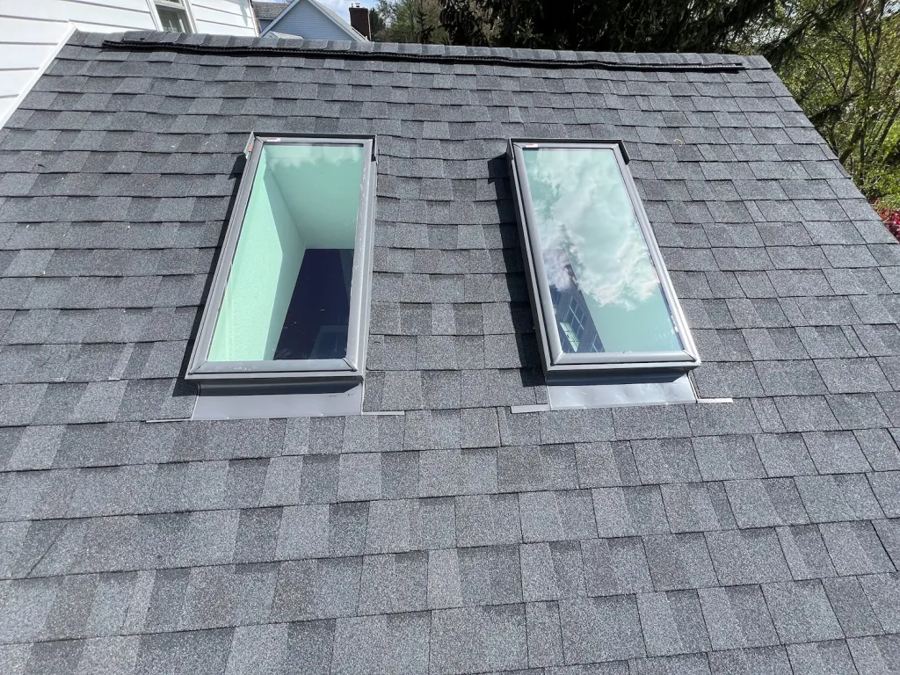
Skylights are a popular way to brighten kitchens, bathrooms, stairwells and upstairs bedrooms, especially in New England, where winter days are short. But every skylight is an opening in your roof, and how it’s flashed and sealed determines whether it stays dry.
Many skylight leaks aren’t caused by the skylight itself. They come from worn or poorly installed flashing, failed seals, or shingles that weren’t properly integrated around the unit. We look at the whole picture before recommending whether to repair, reflash or replace.
If you’re planning a roof replacement, it’s an ideal time to add a new skylight or replace an aging one, because the surrounding roof is already being rebuilt.
Skylights face sun, rain, snow and ice from every direction. These are the problems we see most often:
Worn, damaged or poorly integrated flashing is the most common cause of skylight leaks.
When the seal between panes fails, moisture can get between the glass and cloud the view.
Warm, moist indoor air can condense on cold skylight glass in winter, which is sometimes mistaken for a leak.
Impact from branches or debris and age can damage the glass or frame.
Snow piling up on the uphill side of a skylight can lead to meltwater backing up under the shingles.
Reusing an aging skylight during a roof replacement can leave a weak point in an otherwise new roof.
Look up at your skylights now and then, especially after storms. Watch for:
Discoloration on the drywall around the skylight opening usually means water is getting in.
Water that appears only in wet weather points to a leak rather than condensation.
Moisture trapped between the glass means the seal has failed.
Repeated moisture around the skylight opening causes paint and drywall damage.
Damage to the glass or frame can let water in and reduce efficiency.
Reroofing is the best time to replace older skylights.
Water stains around a skylight? We’ll find out whether it’s the flashing, the seal or condensation.
From a new skylight to a stubborn leak, here’s how we approach skylight work:
Tell us whether you want a new skylight or have an existing one that’s leaking or damaged.
We check the flashing, seals, glass, frame and surrounding shingles, and look at the opening from inside.
We recommend a repair, reflash, replacement or new installation, with a free estimate.
For new skylights, we plan the location and opening. For replacements, the old unit and flashing are removed.
The skylight is set, and underlayment and flashing are integrated with the shingles so water is directed around and over the unit.
We check the finished work and clean up the work area.
A skylight relies on a layered system: underlayment and ice and water protection around the opening, side flashing integrated with the shingle courses, and head flashing that directs water around the uphill side of the unit. When those layers are installed in the right order, water sheds over and around the skylight instead of into the roof.
We follow the skylight manufacturer’s flashing instructions and integrate the flashing carefully with your shingles. As a CertainTeed SELECT ShingleMaster™ contractor, we pay close attention to how every roof penetration ties into the roofing system.

E&B Roofing LLC is a CertainTeed SELECT ShingleMaster™ contractor, a credential that reflects our commitment to professional installation of CertainTeed roofing products.
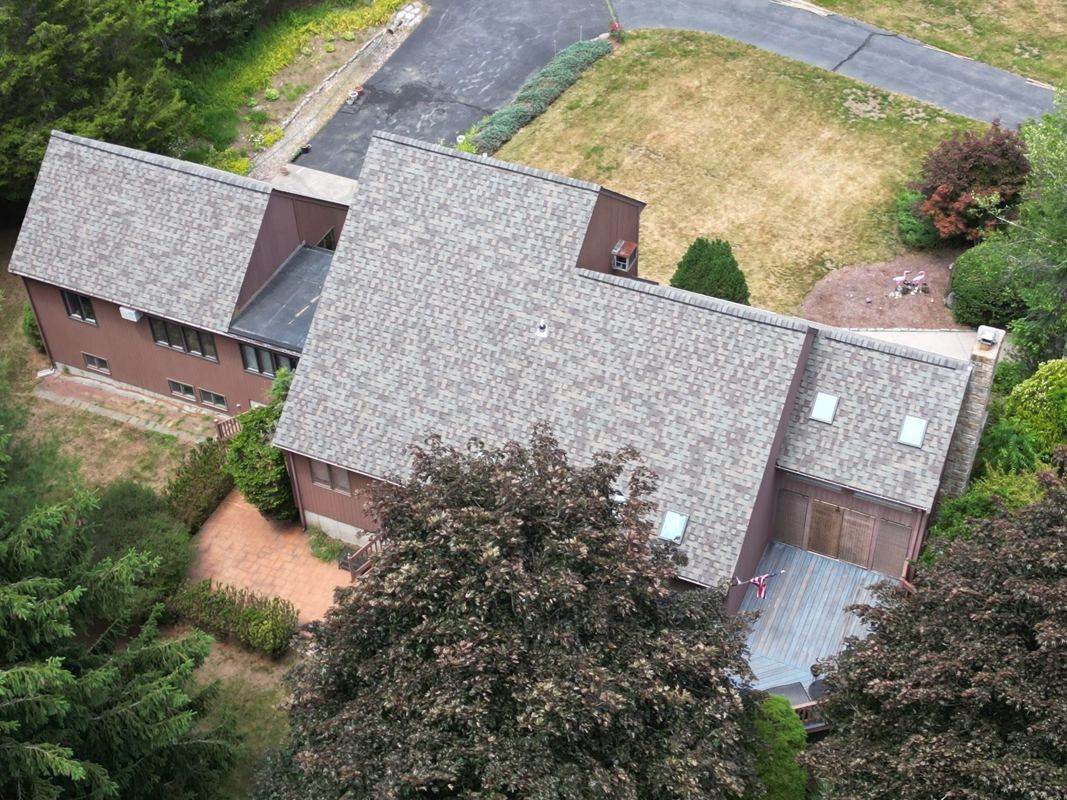
We figure out whether it’s a leak, a seal or condensation before recommending work.
Flashing integrated with the shingles, installed in the right order.
New or replacement skylights installed alongside your new roof.
Know your options and what each involves.
Every photo on this page is from a real E&B Roofing LLC project. See more of our work in the project gallery, or read about our team.
The most common causes are worn or poorly installed flashing, failed seals around the glass or frame, damaged shingles around the unit, and snow or ice backing up on the uphill side. An inspection helps pinpoint the cause.
Condensation usually forms on the glass on cold days, especially in bathrooms and kitchens with higher humidity, and isn’t tied to rain. A leak typically shows up during or after rain or snowmelt, often at the edges of the frame or the opening around it.
It’s often a good idea. Replacing an older skylight during a roof replacement means the new unit and its flashing are installed with the new roof, rather than leaving an older component in place.
In many cases, yes. We’ll look at the roof, the framing and the room below to discuss whether the location you have in mind is practical.
Sometimes. If the unit is in good condition and the problem is the flashing or seals, reflashing or resealing may solve it. If the unit itself is damaged or near the end of its life, replacement is usually the better choice.
Roof and exterior problems are often connected. These related services from E&B Roofing LLC are also available across Attleboro, Massachusetts and Rhode Island. You can also view all of our services.
Leaks, missing shingles, failed vent boots and loose flashing, traced to the source and repaired properly.
Flashing inspection, repair and replacement where your chimney meets the roof.
CertainTeed architectural shingles installed as a complete system, with help choosing colors and styles.
Want more natural light or need a leaking skylight fixed? Call E&B Roofing LLC or send us an estimate request, and we’ll get back to you as soon as possible.