Dried-out sealant
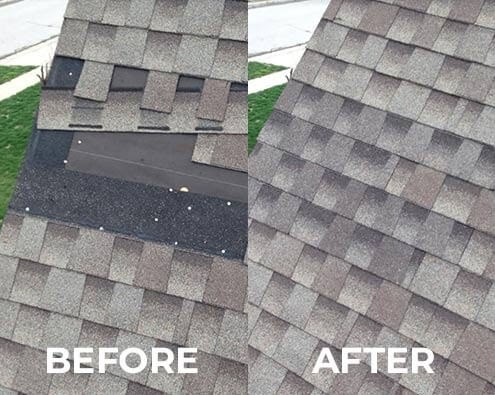
Many chimney flashings rely on caulk or roofing cement that cracks and pulls away after a few seasons of sun and frost.
The joint between your chimney and your roof is one of the most leak-prone spots on any house. E&B Roofing LLC inspects, repairs and replaces chimney flashing to keep water out where brick meets shingles.
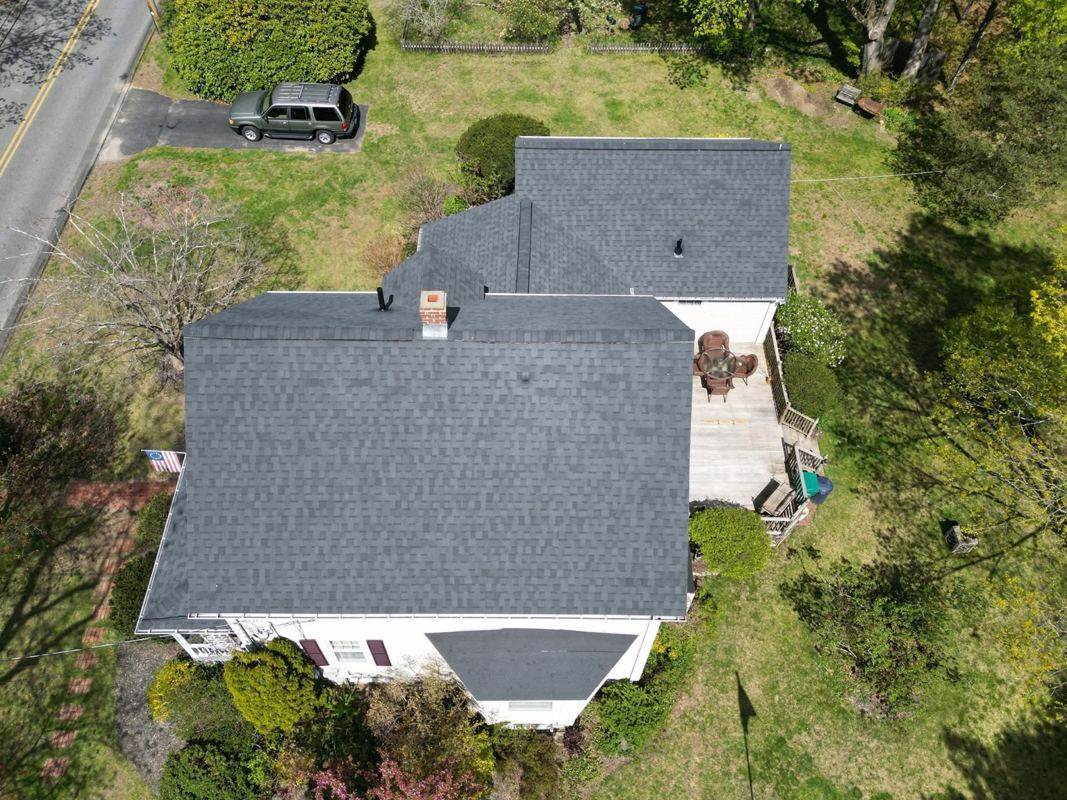
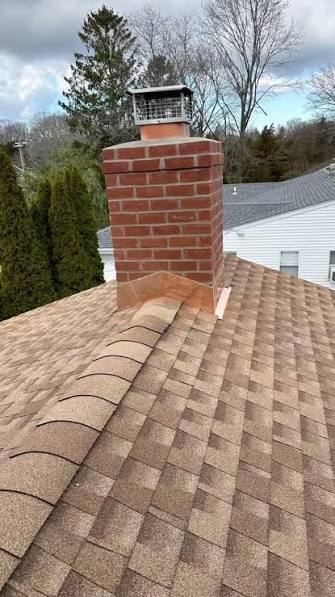
A chimney passes straight through the roof, and brick and shingles move differently as temperatures change. Flashing bridges that gap. On most chimneys, it’s made of step flashing woven into the shingles along the sides and counter flashing set into the mortar joints and lapped over it, so water runs down and away rather than behind.
Over time, sealant dries out, metal corrodes and counter flashing can pull out of the mortar. Some chimneys were never flashed correctly in the first place and rely on roofing cement that fails within a few seasons. Any of these can let water run down the chimney into the attic, ceilings and walls.
Our work focuses on the roof side of the chimney: the flashing, the shingles around it and the transitions. If we notice masonry problems such as cracked brick, a deteriorating crown or loose mortar, we’ll point them out so you can have them addressed by a mason.
Chimney leaks are among the most common roof problems we see on older homes in Massachusetts and Rhode Island. Typical causes include:
Many chimney flashings rely on caulk or roofing cement that cracks and pulls away after a few seasons of sun and frost.
When the top edge of the flashing loosens, water can run behind it.
Older flashing can rust through, leaving holes or thin spots.
Some chimneys have tar or cement smeared over the joint instead of proper step and counter flashing.
On the uphill side of wider chimneys, water and snow can collect against the brick instead of flowing around it.
Reusing old flashing during a reroof can leave a weak point around the chimney.
Chimney leaks often show up some distance from the chimney itself. Watch for:
Stains on ceilings or walls next to the chimney are a classic sign of flashing problems.
Dark, stained or wet wood around the chimney in the attic points to water entering at the roofline.
From the ground, look for flashing that’s bent, lifted or separated from the brick.
Heavy patching around the chimney often means the flashing has been leaking for a while.
Rust on the roof or brick below the flashing signals corroding metal.
Peeling paint or damp drywall next to the chimney can mean water is getting in at the roof.
Stains near your chimney? We’ll check the flashing and explain what we find.
Proper chimney flashing work follows a careful sequence:
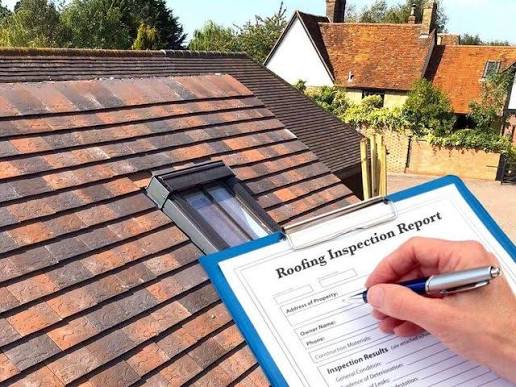
We check the flashing, sealant, surrounding shingles and the attic below for signs of water entry.
We explain what’s failing, whether a repair or full replacement is needed, and provide a free estimate.
Old sealant, damaged flashing and surrounding shingles are removed as needed.
Step flashing is woven in with the shingles and counter flashing is set to overlap it, with protection around the base where appropriate.
Shingles are reinstalled around the chimney and the work is checked for clean, watertight transitions.
We clean up the work area and let you know about any masonry concerns we noticed.
Sealant has its place, but it shouldn’t be the only thing keeping water out. Durable chimney flashing relies on overlapping metal: step flashing along the sides, an apron at the front, back flashing on the uphill side and counter flashing over the top. Wider chimneys may also benefit from a cricket, a small peaked structure that diverts water around the uphill side.
We’ll explain what your chimney has now, what it needs and why, and include the details in your estimate. Chimney flashing also gets careful attention as part of every roof replacement we complete.
E&B Roofing LLC is a CertainTeed SELECT ShingleMaster™ contractor, a credential that reflects our commitment to professional installation of CertainTeed roofing products.
We trace the leak, rather than adding another layer of tar.
Overlapping step and counter flashing, installed properly.
We’ll tell you if we see brick or crown issues that need a mason.
Know what your chimney needs before any work begins.
Every photo on this page is from a real E&B Roofing LLC project. See more of our work in the project gallery, or read about our team.
Wind-driven rain and heavy downpours can push water into gaps in flashing or sealant that stay dry in lighter rain. Leaks that appear only in certain storms are common with chimney flashing problems.
Minor issues, such as a small section of loose counter flashing, can sometimes be repaired. If the flashing is corroded, was installed incorrectly, or relies mainly on patches and sealant, replacement is usually the more reliable fix.
Water can enter through the flashing, but also through cracked brick, porous mortar or a damaged crown or cap. We check the roof-side flashing and point out any masonry issues we see, so you have a clearer idea of where the water is coming from.
In most cases, yes. A new roof is the best time to install new step and counter flashing so it’s properly integrated with the new shingles.
Our work focuses on the flashing and the roofing around the chimney. If we notice masonry problems, we’ll point them out so you can have a mason take a look.
Roof and exterior problems are often connected. These related services from E&B Roofing LLC are also available across Attleboro, Massachusetts and Rhode Island. You can also view all of our services.
Leaks, missing shingles, failed vent boots and loose flashing, traced to the source and repaired properly.
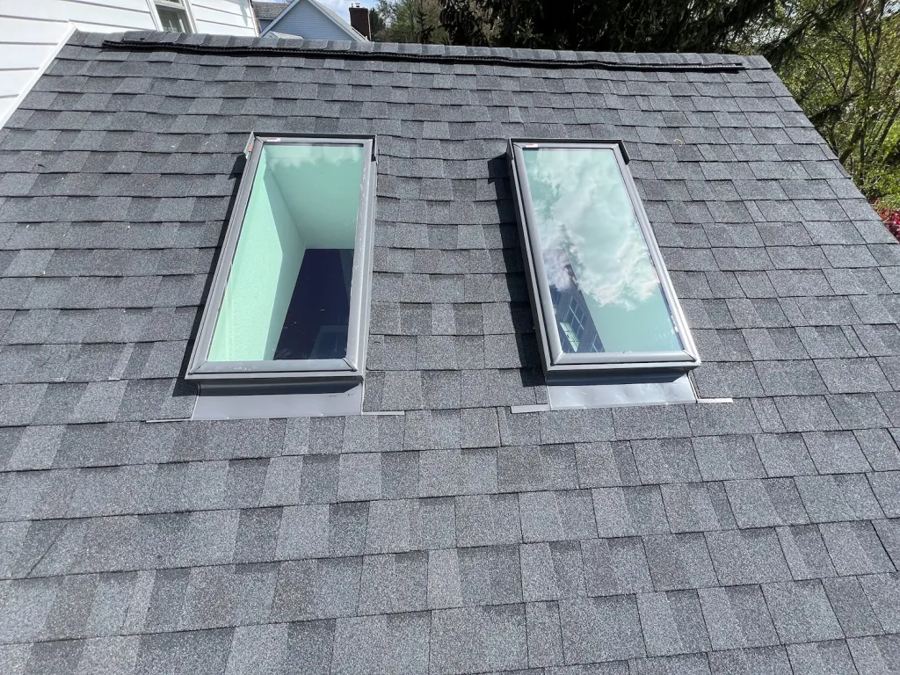
New skylights, replacements and leak repairs, with careful flashing to keep the roof watertight.
A careful look at shingles, flashing and ventilation, with findings explained in plain language.
Leaks or stains near your chimney? Call E&B Roofing LLC or send us an estimate request, and we’ll get back to you as soon as possible.