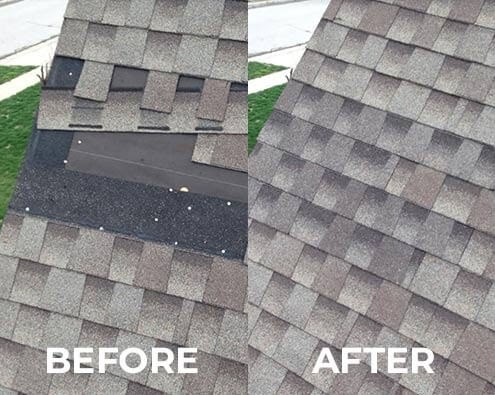
Wind damage
Strong storms and nor’easters can peel back shingles along the edges and ridges, exposing the underlayment and decking to rain.
Water coming through the ceiling or storm damage on your roof needs prompt attention. Call E&B Roofing LLC to talk through what’s happening, available scheduling and the next steps to protect your home.
Some roof problems can wait for a convenient appointment. Others can’t. A leak dripping into a bedroom, shingles torn away by high winds, or a tree limb resting on the roof all put your home at risk of more water damage with every rainfall.
When you call E&B Roofing LLC about an urgent problem, we’ll ask what you’re seeing, where water is coming in and how the damage happened. That helps us understand how serious the situation is, talk through available scheduling and plan the next steps. Depending on the damage, that may include temporary protection to limit further water entry, followed by a permanent repair.
We’ll give you a straightforward answer about when we can be there and what we recommend, so you can make decisions for your home with clear information.
New England weather can turn a minor weak spot into an urgent problem overnight. These are the situations homeowners in Massachusetts and Rhode Island most often face:
Strong storms and nor’easters can peel back shingles along the edges and ridges, exposing the underlayment and decking to rain.
A falling branch can crack shingles, puncture decking or damage the roof edge. The roof under a large limb may be weakened, so it should be handled carefully.
Wind-driven rain can find weak spots in flashing, vents and worn shingles that stay dry in normal weather.
In winter, meltwater can back up behind ice at the eaves and seep under shingles, showing up as leaks along exterior walls and ceilings.
Flashing at chimneys, skylights and walls can be pulled loose by wind or fail suddenly when old sealant gives out.
Not all damage is visible from the ground. Lifted shingles may look fine but no longer be sealed, leaving them likely to blow off in the next storm.
If you notice any of the following, call us promptly rather than waiting for the next storm:
Active water inside means the roof is no longer keeping the weather out. If water is near electrical fixtures, keep clear of the area.
Trapped water can make drywall sag. Keep people and pets away from the area and have it looked at quickly.
Exposed underlayment or bare decking can’t protect your home for long.
Impact damage can affect the decking and roof structure, not just the shingles.
Bent or detached flashing at a chimney, wall or skylight leaves an open path for water.
Wet insulation or dripping decking means water is getting in, even if it hasn’t reached your living space yet.
Dealing with one of these right now? Call 774-300-1932 to talk through next steps.
While you wait for a roofer, a few simple steps can help limit damage inside your home. Always put your safety first.
Wet, damaged or icy roofs are dangerous. Leave roof access to professionals with the right equipment.
Place buckets or containers under drips and move furniture, electronics and belongings out of the way.
If water is near lights, outlets or wiring, keep away from the area. If you’re unsure whether it’s safe, contact a qualified electrician.
From a safe spot, take photos of the damage inside and out. They’re useful for your records and any conversation with your insurer.
Call 774-300-1932 to describe the problem and talk about the next steps for your roof.
Here’s how we handle urgent roof problems for homeowners in Attleboro and throughout Massachusetts and Rhode Island:
Tell us what’s happening, where water is coming in and whether there’s visible damage outside.
We discuss available scheduling, then inspect the damaged area and the surrounding roof once it’s safe to do so.
When needed and appropriate, temporary measures may be used to limit further water entry until a permanent repair can be completed.
We explain what’s damaged and what it will take to repair it properly, with a free estimate before the permanent work.
We replace damaged shingles, flashing or decking as needed, clean up and check the finished work.
A temporary fix is only meant to buy time. The goal is a permanent repair that ties into your existing roof correctly, so the same spot doesn’t fail again in the next storm.
Storm damage often reaches beyond the obvious area. Shingles near the damage may have lost their seal, and nearby flashing may have been bent. We check the surrounding roof so the repair addresses everything the storm affected. If the damage is extensive, we’ll explain whether a repair or a full roof replacement makes more sense.
As a CertainTeed SELECT ShingleMaster™ contractor, we understand how roofing components are designed to work together as a system, and we bring that knowledge to every repair.

E&B Roofing LLC is a CertainTeed SELECT ShingleMaster™ contractor, a credential that reflects our commitment to professional installation of CertainTeed roofing products.
We tell you honestly when we can be there, so you can plan.
We look at surrounding shingles and flashing, not just the spot that’s leaking.
You’ll understand what’s temporary, what’s permanent and what each involves.
Attleboro and communities across Massachusetts and Rhode Island. See our service areas.
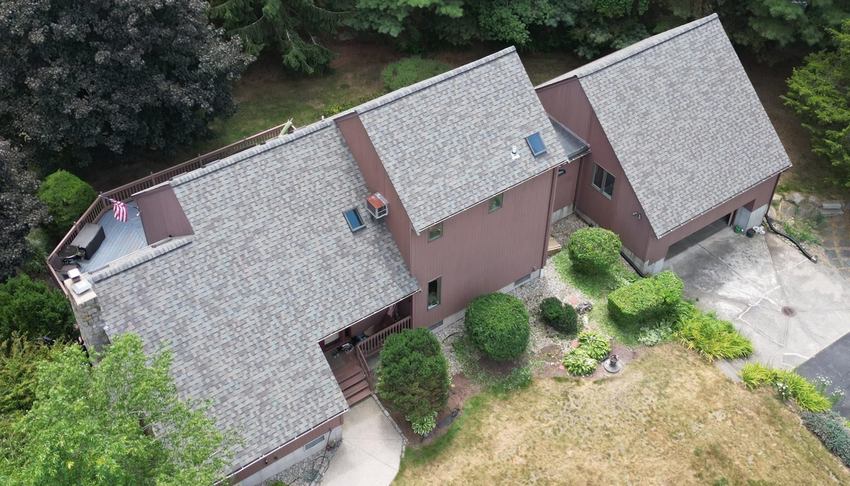
Every photo on this page is from a real E&B Roofing LLC project. See more of our work in the project gallery, or read about our team.
Availability depends on our schedule, the weather and how many storm-related calls we’re handling at the time. Call 774-300-1932 and we’ll give you an honest answer about when we can be there.
Permanent roof repairs need reasonably dry, safe conditions. During an active storm, the focus is on limiting water damage inside your home, and the permanent repair is completed once conditions allow.
We recommend staying off the roof, especially when it’s wet, icy or damaged. Climbing onto a roof in those conditions is dangerous. Focus on containing water inside and call a professional.
That’s a decision between you and your insurer. Clear photos of the damage and notes about what happened and when are helpful records either way.
Not necessarily. Many storm-damaged roofs can be repaired. If the damage is widespread or the roof was already near the end of its life, replacement may be worth considering. We’ll explain what we find so you can decide. Learn more about roof repair.
Roof and exterior problems are often connected. These related services from E&B Roofing LLC are also available across Attleboro, Massachusetts and Rhode Island. You can also view all of our services.
Leaks, missing shingles, failed vent boots and loose flashing, traced to the source and repaired properly.
A careful look at shingles, flashing and ventilation, with findings explained in plain language.
Gutter and downspout installation and repair that carries water away from your roofline and foundation.
Call 774-300-1932 to describe the damage and discuss available scheduling. For problems that aren’t urgent, you can also send us a free estimate request online.